
Cedar County Criminal History Checks
Start with the record that answers the question. The Cedar County inmate roster is the fastest official source for current county custody. Iowa Courts Online is the route for a filed Cedar County criminal case, charge-level disposition, hearing, or financial entry. The Cedar County Sheriff's Records counter supplies a deputy's accident or incident report, while the Iowa Department of Public Safety, Division of Criminal Investigation supplies the official statewide history product. No one search combines those four sources.
Use a full legal name and an exact date of birth when a system permits it. A middle name can help separate common-name results. Then compare the source, county, case number, booking date, and disposition rather than assuming the first name match is correct. For a certified result, contact the custodian instead of relying on a screen capture.
- Choose custody, court, police-report, or statewide-history records before searching.
- Use the official name fields and Cedar County filter when one is offered.
- Read each charge or booking basis in context and check identifiers carefully.
- Trace a booking into the court docket after prosecutors file a case.
- Order a report or certified copy from the office that maintains the original.
Note: A current jail entry, court docket, and DCI response are separate products and should not be treated as interchangeable criminal records.
Four Cedar County Record Systems
Cedar County criminal records move through a chain. An officer first writes an incident or arrest report. If the jail accepts the person, staff create a booking record and collect identifying data. The Cedar County Attorney decides which state charges to prosecute, and the Clerk of District Court maintains the resulting case. Fingerprint-supported arrest data and later dispositions also flow to DCI.
Each source freezes a different part of that chain. The roster is a live custody snapshot. The court index follows litigation and outcomes. A sheriff report describes one event. DCI returns Iowa criminal-history information that law allows it to release. Delayed filing, a changed charge, missing fingerprints, a restricted disposition, or a later court order can explain why the records do not match.
| Source | Best answer | Key limit |
|---|---|---|
| Cedar jail roster | Current local custody | Not a case outcome |
| Iowa Courts Online | Filed charges and disposition | Index, not every document |
| Sheriff Records | Local incident narrative | Only records held by that agency |
| DCI record check | Releasable Iowa repository history | Not every narrative or pleading |
The official Cedar County homepage shows the county offices that divide this work.
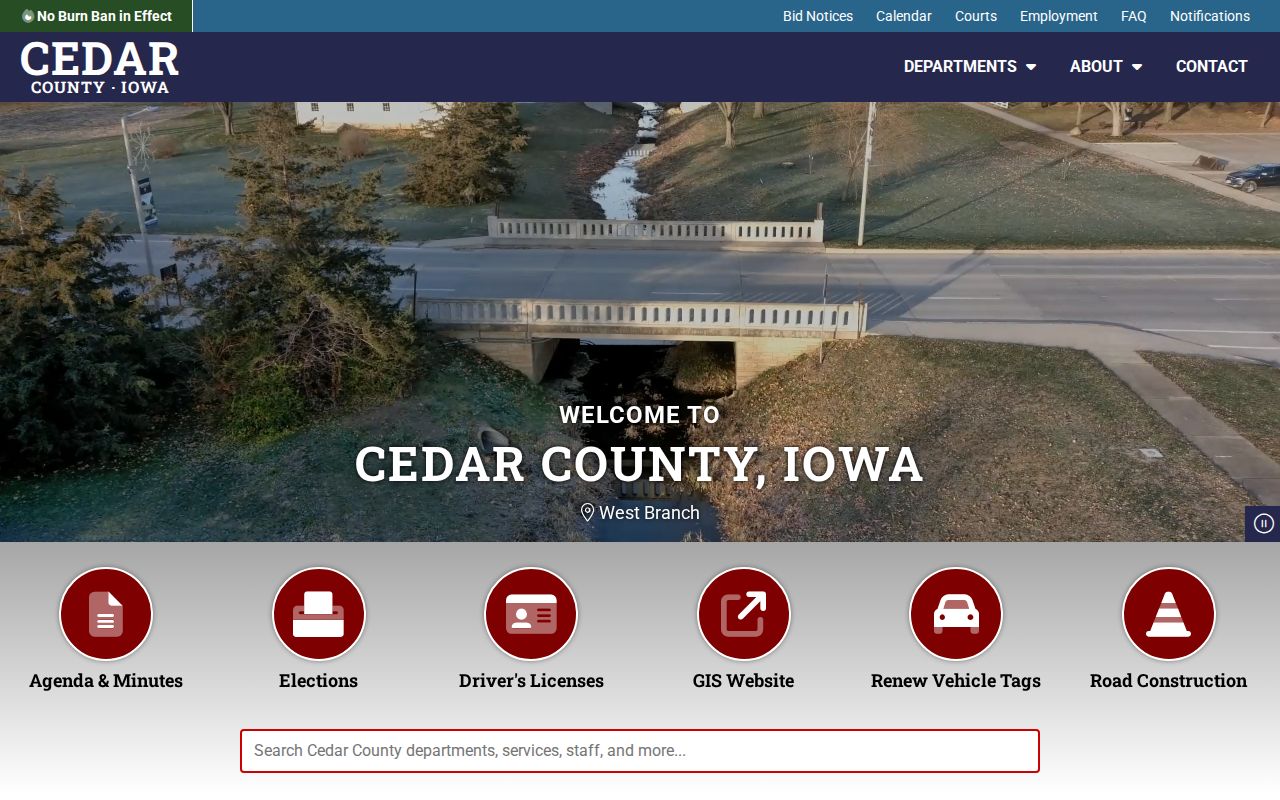
That directory is a useful starting point, but the record itself still comes from the sheriff, clerk, court system, or state repository.
Official Background Checks in Iowa
The Iowa Department of Public Safety, Division of Criminal Investigation is the state repository. Its Iowa Record Check Online product requires a first name, last name, and exact date of birth. DCI charges $15 for each last name requested. Middle name, gender, and Social Security number are optional identifiers that may improve matching, though sensitive data should be sent only through the official process.
Online submission requires both request and billing information, a payment card or DCI account, and a delivery address, fax, or email. DCI also documents mail, fax, and in-person routes. It does not accept a request by phone. A person seeking an immediate in-person copy of their own record must show government photo identification at the DCI office in Des Moines. The FBI Identity History Summary is a different, subject-only fingerprint product for nationwide federal identity history.
The Iowa Record Check Online interface shows the state request channel.
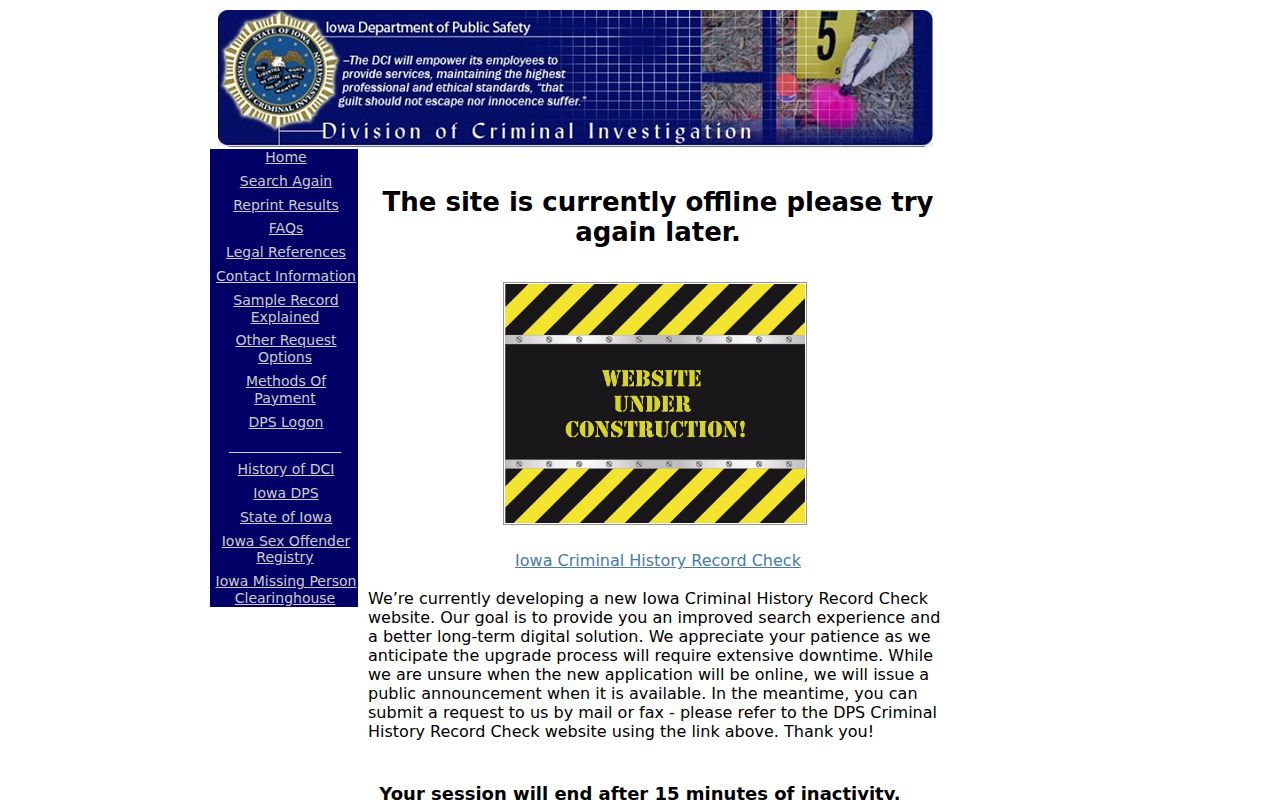
A name-and-date-of-birth request is not fingerprint-positive identification and does not replace Cedar County court or incident records.
Cedar County DCI Record Channel
A DCI result can state that no Iowa criminal history was found or return a releasable Iowa record. Neither result should be stretched beyond the product's scope. DCI depends on source agencies, covers Iowa rather than every state or federal court, and applies chapter 692 release limits. Confidential juvenile information is excluded. A discharged deferred judgment is released only with the subject's signed authorization.
An arrest older than eighteen months without a disposition also falls within restricted release categories under Iowa law. When an apparent error appears, the subject can contact DCI's record-check unit. DCI may ask for fingerprints to resolve identity or matching questions. Court correction and repository correction are linked, but they are not the same operational update.
| Channel | Published cost | Use |
|---|---|---|
| Cedar sheriff report | $5 | One local accident or incident copy |
| Iowa Courts Online | Basic index free | Filed cases and dispositions |
| DCI Iowa history | $15 per last name | Releasable Iowa repository data |
| FBI identity summary | Verify current FBI fee | A person's own federal identity history |
Note: A DCI “no record” response may reflect release restrictions, not only the complete absence of criminal-history information.
Kinds of Criminal Records
Cedar County criminal history is built from documents with different custodians. An incident report describes an officer's response. A booking record documents intake and custody. A complaint, trial information, or indictment states formal allegations. The District Court file records hearings, motions, judgment, sentence, and public financial entries. A DCI history assembles fingerprint-supported arrest cycles and releasable dispositions.
Other records sit beside that core trail. A warrant is issued by a judicial officer and tracked through law enforcement and the case. The county roster covers current jail custody, while Iowa Corrections Offender Information covers the state corrections system. The Iowa Sex Offender Registry publishes information selected by chapter 692A. Probation and parole files include operational information that is not fully public.
- Incident or arrest report: request it from the agency that wrote it.
- Booking record: begin with the Cedar County Jail and current roster.
- Court case: search Iowa Courts Online and contact the Cedar clerk.
- Repository history: use the DCI request process and chapter 692 rules.
- Corrections record: distinguish county jail, state prison, and federal custody.
The Iowa Corrections Offender Information search provides the state-sentenced layer.
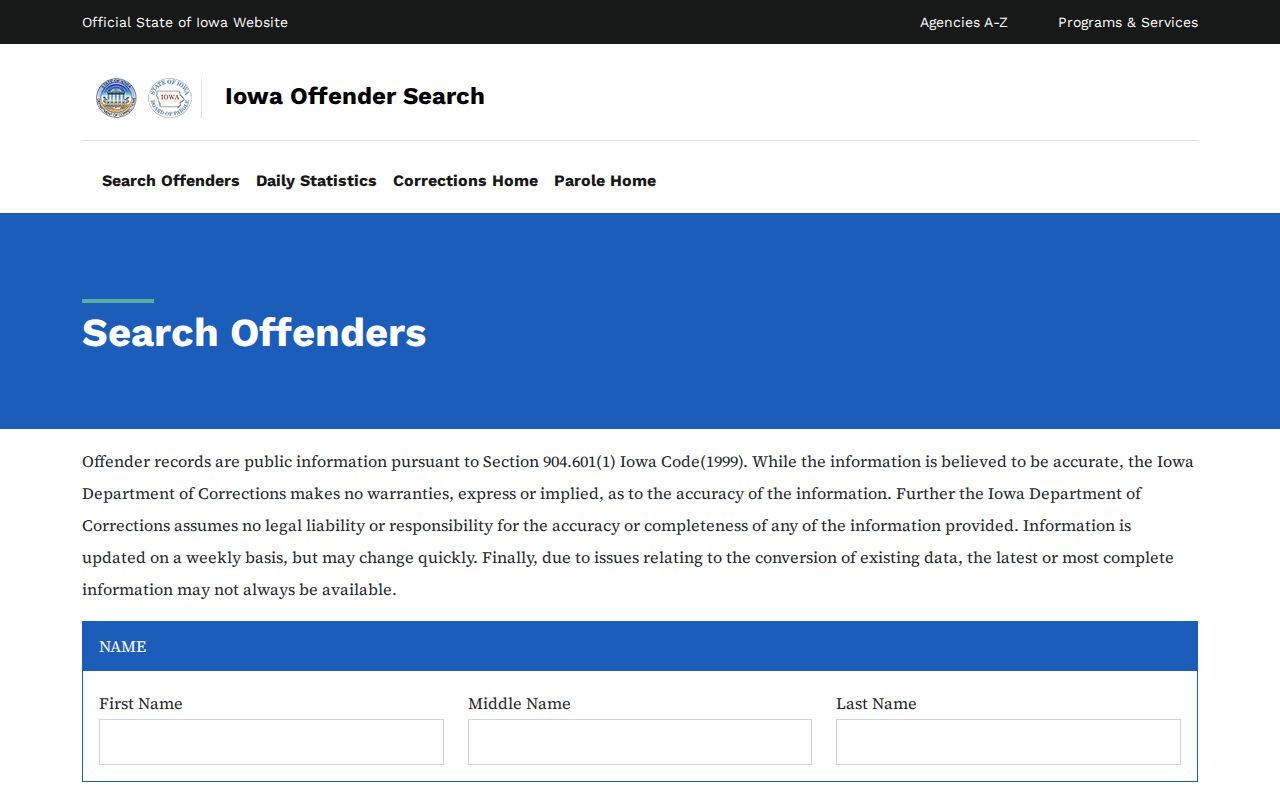
Its status information cannot substitute for the Cedar County court docket that imposed a sentence.
Cedar County Sheriff Report Route
The Cedar County Sheriff's Records service sells paper copies of accident and incident reports for $5. Requests may be made in person or by mail, with cash or a check payable to Cedar County Sheriff. After the office receives the request and payment, it can send the finished copy by mail, email, or fax. Accident reports are ordinarily available five to seven business days after the incident.
The records counter is at the Cedar County Law Enforcement Center, 711 E. South Street, Tipton, Iowa 52772. Its phone is 563-886-2121, and published records hours are Monday through Friday, 8:00 a.m. to 4:00 p.m. The county does not advertise an online request form, card payment, certified-copy surcharge, or local clearance product. For other media, identify the event, agency, date range, report number if known, desired format, and a maximum cost before the office begins a large search or redaction job.
The Cedar County sheriff page identifies the local law-enforcement and jail hub.
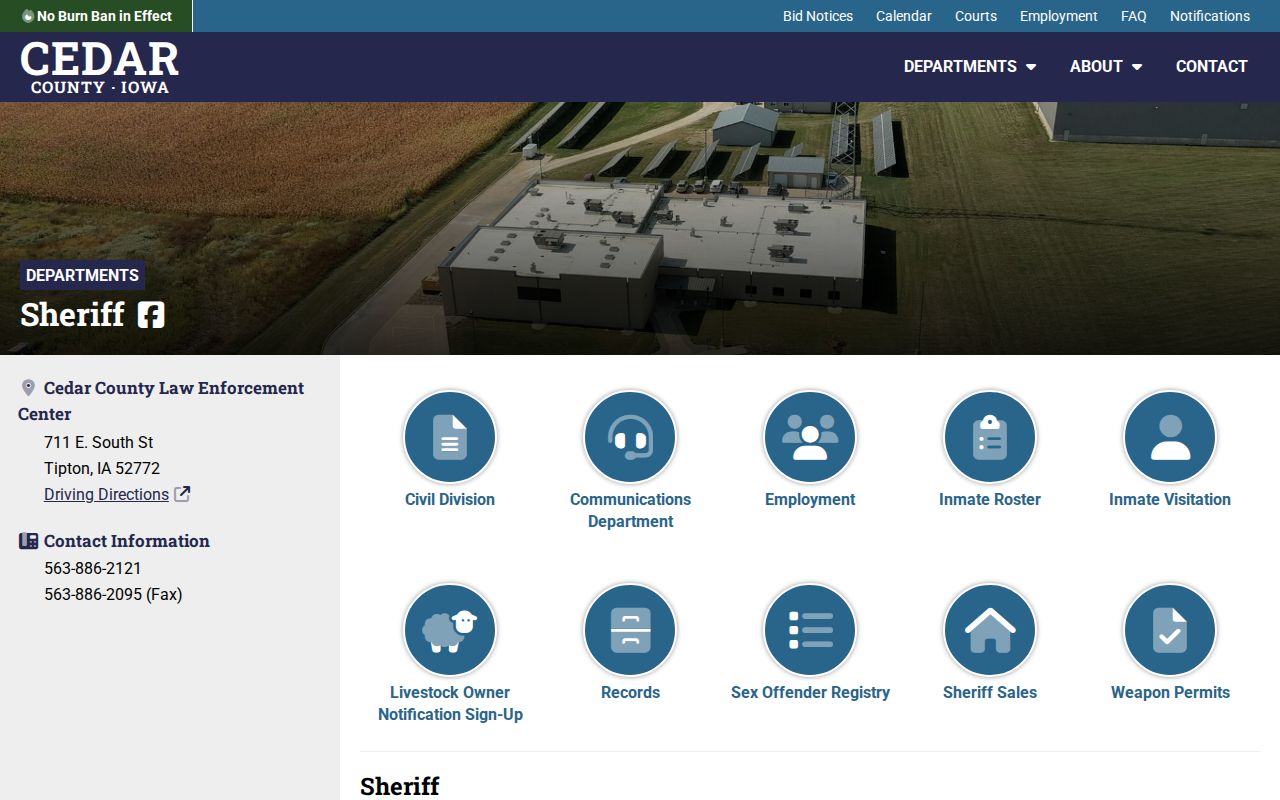
This is the correct local counter for deputy reports and current jail questions, not for certified District Court files.
Cedar County Criminal Records: What They Contain
The visible fields depend on the source. The Cedar roster displays a name, booking date, age, sex, booking basis, and bond when listed. Iowa Courts Online may display a case number, county, parties, case type, filed charges, docket events, hearings, dispositions, and public financial entries. DCI history can include subject identifiers, arrest cycles, agencies, charges, and dispositions that Iowa law permits DCI to release.
Absence matters too. The roster does not show the full police narrative, court docket, or sentence. A court index does not provide the complete police account or every protected filing. DCI does not serve every pleading, confidential juvenile information, or data that is not releasable. Reading the source label prevents many false conclusions.
| Name and identifiers | Used to distinguish people; the exact fields vary by system. |
|---|---|
| Arrest or booking | Date, agency, custody basis, and bond may appear in local records. |
| Charges and statutes | Allegations may change between booking and formal court filing. |
| Disposition | Outcome of each count, such as conviction, dismissal, or acquittal. |
| Sentence | Custody, probation, fines, restitution, and related orders where public. |
| Custody status | County, state, and federal systems report different populations. |
Cedar County Roster Record Terms
The county's current roster uses short custody labels that can be misread. “Criminal charge” describes a basis for booking, not a judgment of guilt. “Warrant” means custody followed a warrant, but the label does not reveal the complete warrant or charge. “Mittimus” refers to custody under a court commitment or order and does not necessarily mark a new arrest.
Bond appears when the roster lists an amount. Its absence does not prove that release is unavailable. The inspected list did not show a mugshot, full date of birth, booking number, arresting agency, statute details, court date, or release date. Search the court docket or call the jail when those details matter.
- Disposition
- The outcome of a charge, such as conviction, dismissal, or acquittal.
- Docket
- The court's chronological record of filed events and orders.
- Deferred judgment
- An Iowa process that postpones judgment while stated conditions are completed.
- Recognizance
- Release based on a promise and conditions rather than deposited cash.
- Mittimus
- A court commitment or order used as the legal basis for custody.
Note: A booking label reports custody status at that moment and does not establish what the prosecutor later filed or how the case ended.
Iowa Public Access Laws
Iowa Open Records Law, chapter 22, creates a right to examine and copy public records unless another law makes the material confidential. The lawful custodian may supervise access, charge reasonable actual costs, and redact protected content. It is still vital to ask the right office. Chapter 22 does not make the sheriff the custodian of court pleadings or a Tipton police report.
Criminal-history dissemination follows chapter 692, court access follows Judicial Branch rules, and juvenile court information is confidential under section 232.147 subject to statutory exceptions. Registry disclosure follows chapter 692A. Public access does not remove restrictions on harassment, threats, trespass, or unlawful use.
Key Iowa laws:
Iowa Code §22.2 establishes the public right to examine and copy nonconfidential records.
Iowa Code §22.3 governs supervision, copying, reasonable fees, and access practices.
Iowa Code §22.7 identifies categories of confidential information.
Iowa Code §692.2 controls release of Iowa criminal-history data.
Iowa Code §232.147 protects juvenile court records, subject to stated exceptions.
Cedar County Warrant Records
Cedar County has no separate public active-warrant portal documented in the research. The jail roster can say “Warrant” after a person enters custody, but it is not a complete list of outstanding warrants. A known court case may show a public warrant event in Iowa Courts Online. The sheriff, issuing agency, or Clerk of District Court can help identify the correct channel.
Call the sheriff at 563-886-2121 when a status is time-sensitive. A focused chapter 22 request may fit some records, but unexecuted, sealed, juvenile, and investigative warrants may be unavailable. Anyone trying to resolve their own warrant should obtain legal advice and confirm bond or surrender instructions directly. A stale website result is not safe operational guidance.
Do not rely on a roster or old docket entry to act on a warrant. Confirm current instructions with the issuing court or law-enforcement agency.
Restricted, Sealed & Expunged Records
Iowa law restricts juvenile court information, protected victim and minor details, Social Security numbers, financial identifiers, medical material, and certain investigative or security records. A public system may omit a case or redact a document without erasing the underlying authorized record. The governing rule depends on the source and record type.
Chapter 901C provides specific expungement routes. Section 901C.2 addresses qualifying not-guilty verdicts and dismissals when statutory conditions are met. Section 901C.3 offers a narrow misdemeanor-conviction route with waiting, debt, prior-deferred-judgment, pending-charge, and offense exclusions. It is not a general clearing of every misdemeanor. A deferred judgment is also not identical to expungement.
File in the Iowa District Court county where the case occurred using the current Judicial Branch form for the specific legal basis. First obtain the case number and disposition, review outstanding debt and eligibility, follow notice instructions, and keep the signed order. The Cedar clerk cannot give legal advice.
The county office directory and court FAQ helps readers reach the proper Cedar County office.
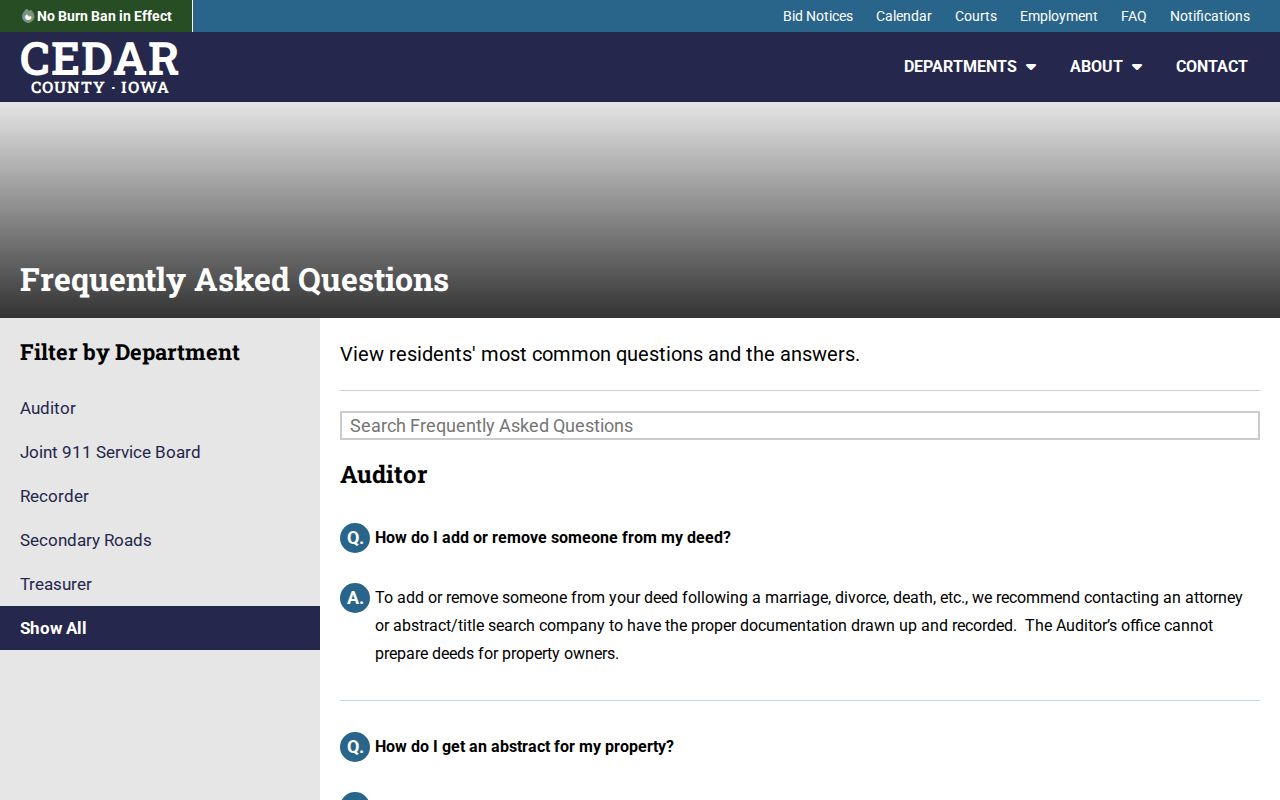
Before traveling, verify the clerk's current hours, document access, copy cost, and accessibility arrangements.
Cedar County Court and DCI Updates
An expungement order can affect both the public court view and DCI history, but the two systems update through separate channels. After an order, check Iowa Courts Online and a personal DCI record independently. If the court display remains wrong, start with the clerk. If the repository entry appears wrong, use DCI's accuracy-dispute contact; fingerprints may be required to confirm identity.
This same two-source check helps with any apparent mismatch. A court may have entered a disposition that has not yet reached the repository. DCI may hold information that chapter 692 does not release in an ordinary request. A jail booking may never lead to a filed charge. Preserve the case number, DCI number if supplied, and copies of orders when asking an agency to research an error.
The Cedar County Attorney page identifies the local prosecution office and its programs.
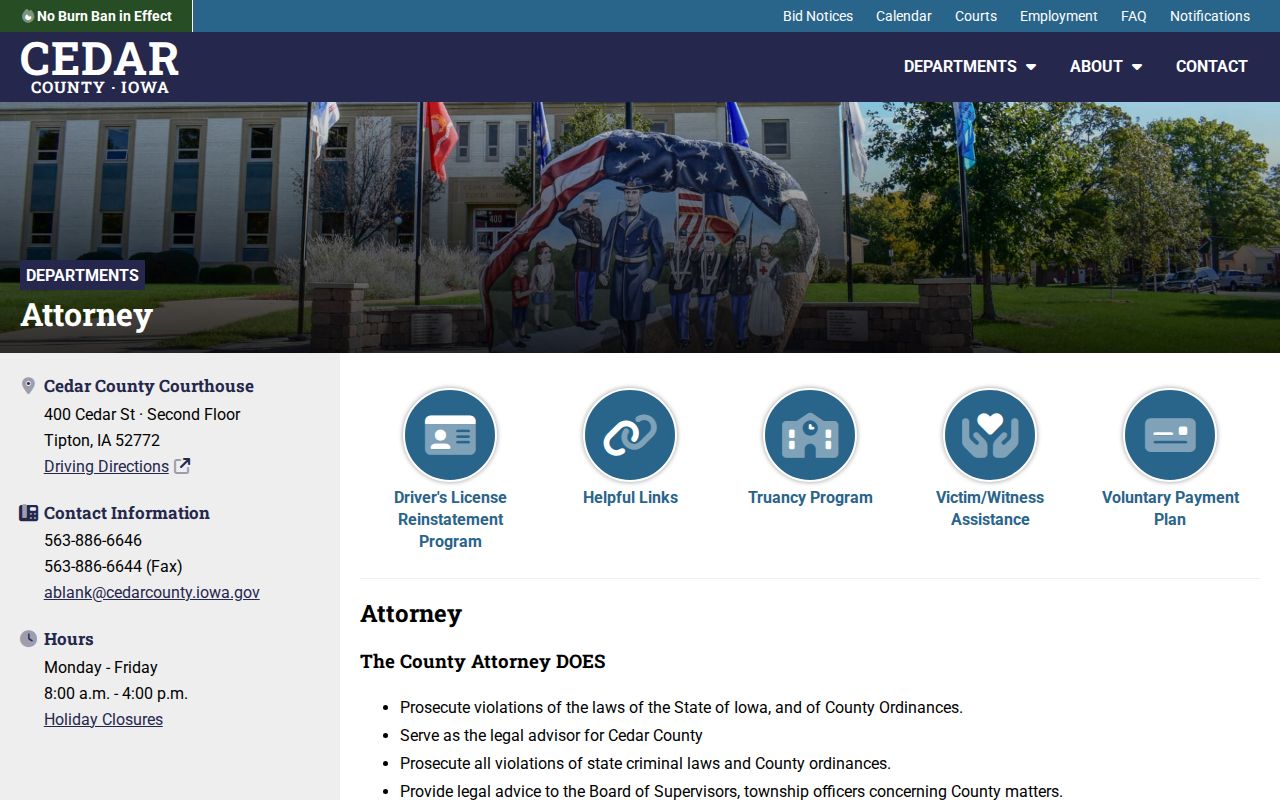
The prosecutor decides filed state charges, but the Clerk of District Court remains the custodian of the court case file.
City-by-City Criminal Records in Cedar County
City police agencies keep their own incident records, while filed criminal matters use Iowa's unified District Court system. Tipton provides weekly call logs and a city records form. West Branch has its own police and city request channels and crosses the Cedar-Johnson boundary. Durant spans Cedar, Muscatine, and Scott Counties, so the event location and arresting agency determine which jail and clerk are relevant.
Tipton Record Check
County seat with police call logs, city records forms, and Cedar County court routing.
West Branch Record Check
A two-county city with separate police and city-clerk request contacts.
Durant Record Check
A three-county city where venue and record custody depend on location.
Cedar County Custody Notifications
The live Cedar roster answers whether a person is listed in current county custody. VINELink adds search and notification functions for custody changes. It supplements the jail and does not replace direct confirmation when a release, transfer, or safety decision is time-sensitive. The statutory victim-notification chain also involves the arresting agency, jail, clerk, Iowa Department of Justice, Iowa Department of Corrections, and Board of Parole at different stages.
The Iowa VINELink service provides the custody-notification entry point.

A notification service can alert a registered user, but the Cedar County Jail remains the direct source for immediate local custody confirmation.
The Cedar County victim and witness assistance page describes local case-status and notification help.
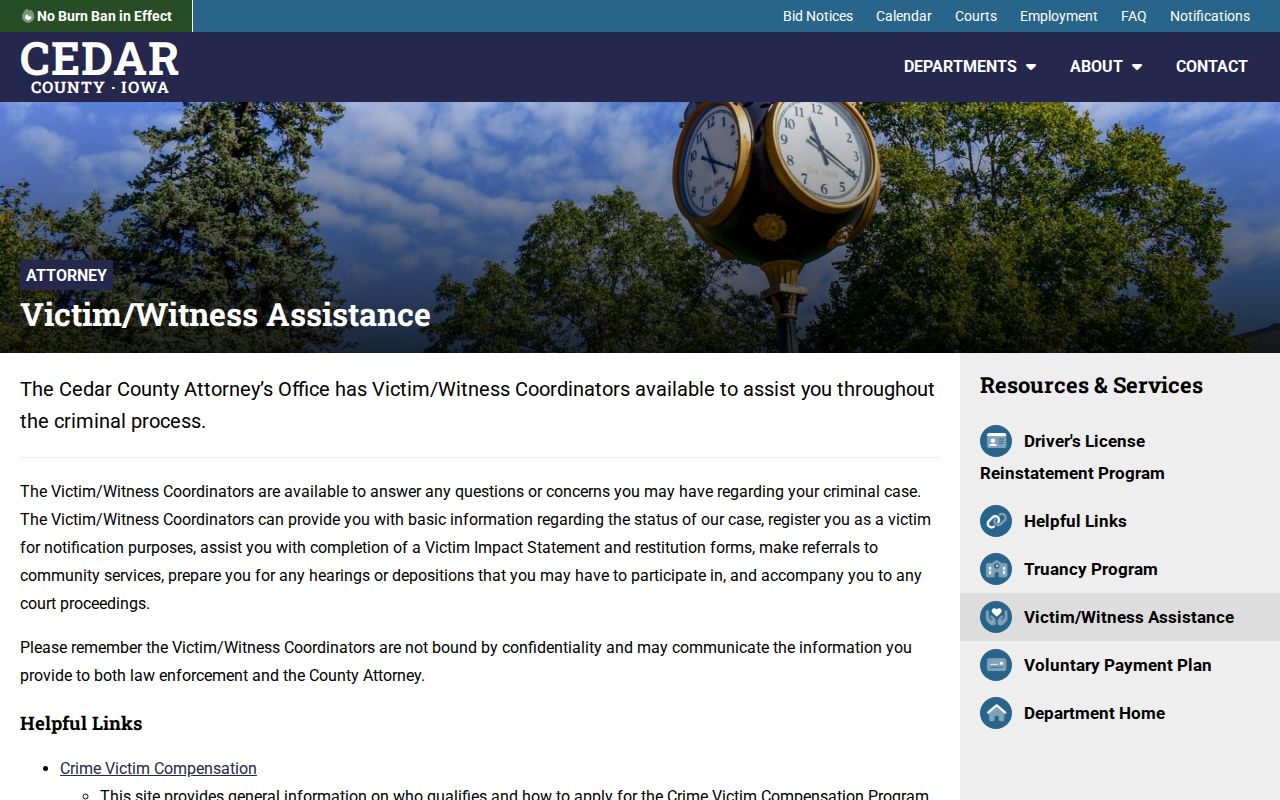
Victim and witness coordinators can provide status basics, notification registration, restitution help, referrals, and hearing preparation, but they are not confidential advocates.
The Iowa Board of Parole website supplies the parole-decision layer.
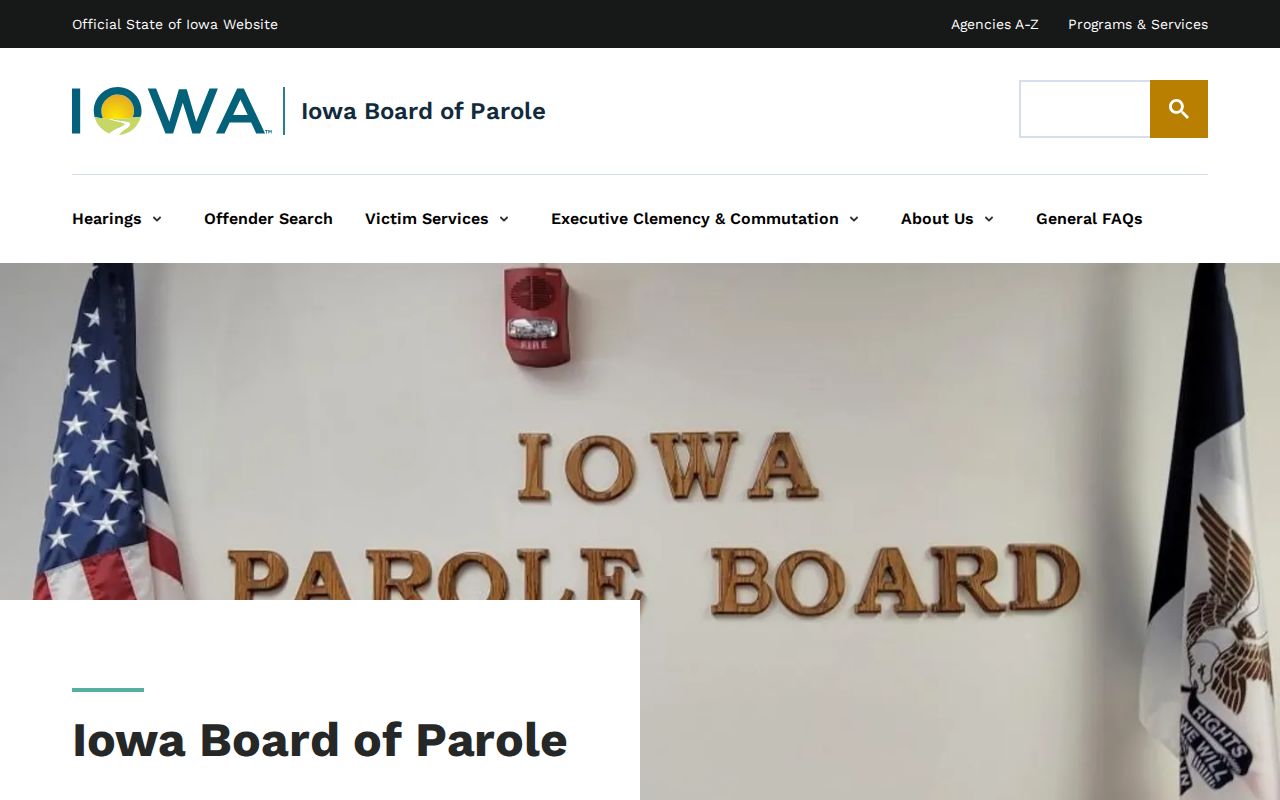
Parole decisions and state supervision records sit beyond the Cedar County jail roster and local court index.