
Criminal Court Cases in Cedar County
Cedar County criminal cases are filed in the Iowa District Court for Cedar County, part of Judicial District 7. Iowa uses a unified district court. Felonies, indictable misdemeanors, simple misdemeanors, and magistrate matters therefore do not sit in separate county felony and misdemeanor clerk offices. City ordinance cases can also enter this court structure. The issuing agency and event location still matter, especially when an incident occurred near a county line.
The Cedar County Clerk of District Court is the custodian of the filed case. The office is in the Cedar County Courthouse, 400 Cedar Street, Tipton, IA 52772, and its phone number is 563-886-2101. Ask the clerk about an older or offline Cedar County court file, public document access, certified copies, interpreter help, or an accommodation. The clerk can explain access and procedure but cannot give legal advice.
Iowa's Unified Cedar County Court
A Cedar County docket brings several levels of criminal work into one statewide structure. The case type and charge severity identify the path more reliably than an assumed court name. A trial information is an Iowa prosecutor-filed charging document used in indictable cases. A complaint is a sworn claim that begins a criminal proceeding. A docket is the dated list of filings and events in the case.
The Iowa Courts Online interface shows how the statewide index supplies a common entry point for Cedar County case searches.
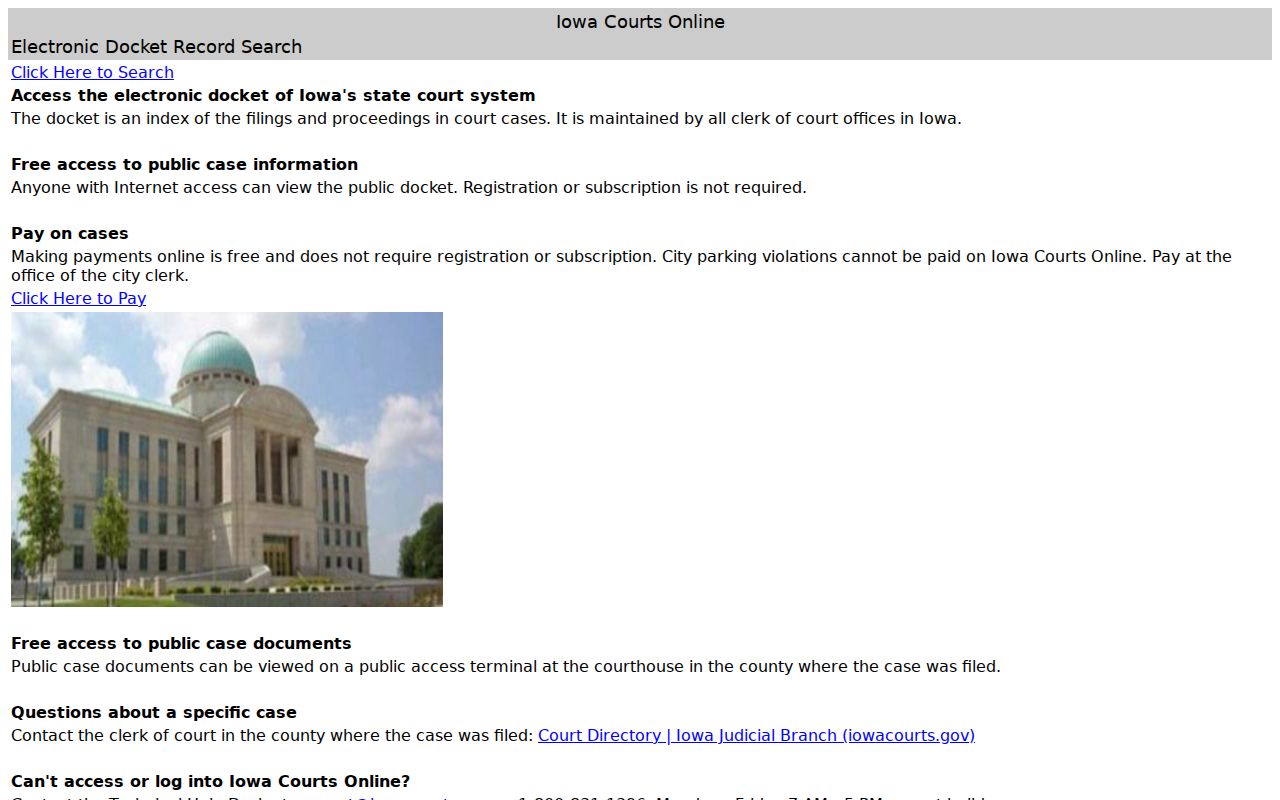
The captured search screen is an index gateway, not a promise that every pleading can be downloaded or that every case is public.
Cedar County Case Record Searches
Begin with the public search in Iowa Courts Online. A known case ID is the best match. Name search works when the number is unknown, but common names demand care. The public index covers trial cases after 1998 and some earlier matters. A new Cedar County case can take one business day to appear; docket data generally updates in real time after entry, though clerk-entered documents may take several days.
- Open Iowa Courts Online and choose the public case search.
- Use a full case ID when known. Otherwise, enter the party name and narrow the search to Cedar County and a criminal case type.
- Use an exact date of birth and other lawful details when available to separate people with similar names.
- Open the docket, then read the disposition on each charge rather than relying on the overall case status.
- Contact the Cedar County clerk for certified copies, older files, inaccessible public documents, or help with courthouse terminal access.
The search controls behave differently by route. Last or firm name needs at least two letters. First name is optional. A percent sign works as a wildcard in name search, and an initial is entered without a period. DOB search requires exact birth date, first name, and last name. Case ID search requires county and case type, with uppercase letters and a zero kept distinct from the letter O.
| Field Label | Type | Required | Notes |
|---|---|---|---|
| Last/Firm | Text | Yes for name search | At least two letters; percent sign permits a wildcard |
| First | Text | No for name search | An initial is entered without a period |
| Date of birth | Date | Yes for DOB search | Exact date plus first and last name; no wildcard |
| County and case type | Select | Yes for case ID | Select Cedar and the correct criminal case type |
| Case ID | Text | Yes on that route | Use uppercase letters; zero is not letter O |
Cedar County Court Search vs EDMS
The free Cedar County index and the Electronic Document Management System serve different jobs. Iowa Courts Online gives the public docket view, including public parties, lawyers, charges, dispositions, hearing entries, and financial entries. EDMS is the filing and registered document-access system. An EDMS account does not turn every docket line into a free remote document, and filing fees must be paid when a court filing requires them.
The Iowa EDMS portal makes that account and filing layer visible beside the free court index.
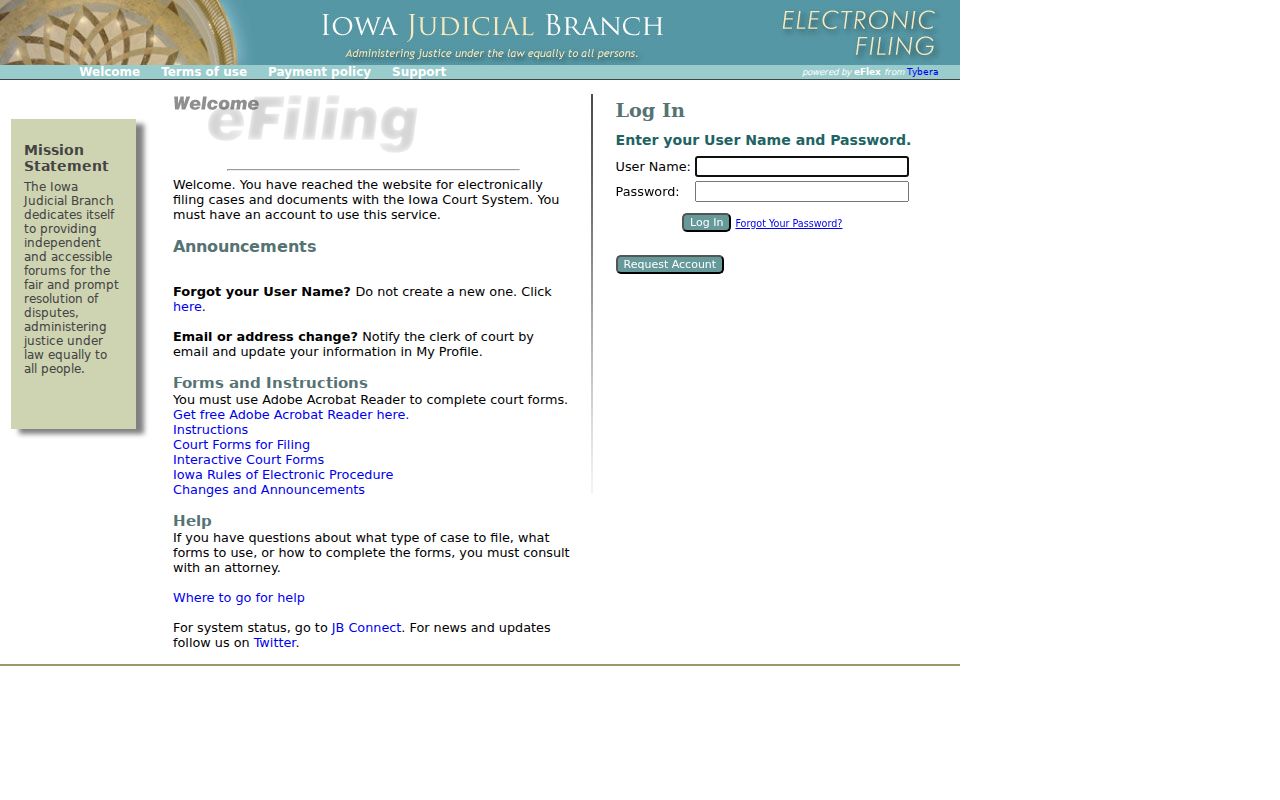
This distinction explains why a Cedar County docket can list a filing even when the underlying PDF is not open through an ordinary web search.
An optional advanced subscription costs $25 per month and adds trial-case and schedule, judgment and lien, exhibit, bond, service-return, party, financial, and traffic search functions. It does not provide unrestricted remote document access. The subscription does not renew automatically. Technical help is available at support@iowacourts.gov or 1-800-831-1396, Monday through Friday from 7:00 a.m. to 5:00 p.m.
What a Criminal Case File Contains
A Cedar County criminal case file records the prosecution rather than the police narrative. Read it at charge level. One count may be dismissed while another ends in conviction, and the overall banner may not show that difference. Public fields can connect the filed charge to hearings, judgment, sentence, and court debt. Protected identifiers, confidential filings, juvenile information, and sealed or expunged material remain outside ordinary public view.
| Case Number & Court | County, court or case type, filing date, case number, and public status |
|---|---|
| Charging Document | Complaint, trial information, or indictment and the filed counts |
| Charges | Description, statute, severity, offense date, count, and charge-level disposition |
| Docket Entries | Appearances, pleas, motions, orders, hearings, judgment, sentence, and public compliance events |
| Parties & Lawyers | State of Iowa, defendant, and attorneys when publicly displayed |
| Financial Entries | Fines, surcharges, restitution, court debt, and payments where public |
| Documents | Availability depends on classification, user access, and EDMS rules |
For federal allegations, a different file may exist. The PACER system covers federal dockets rather than Cedar County's state court file.
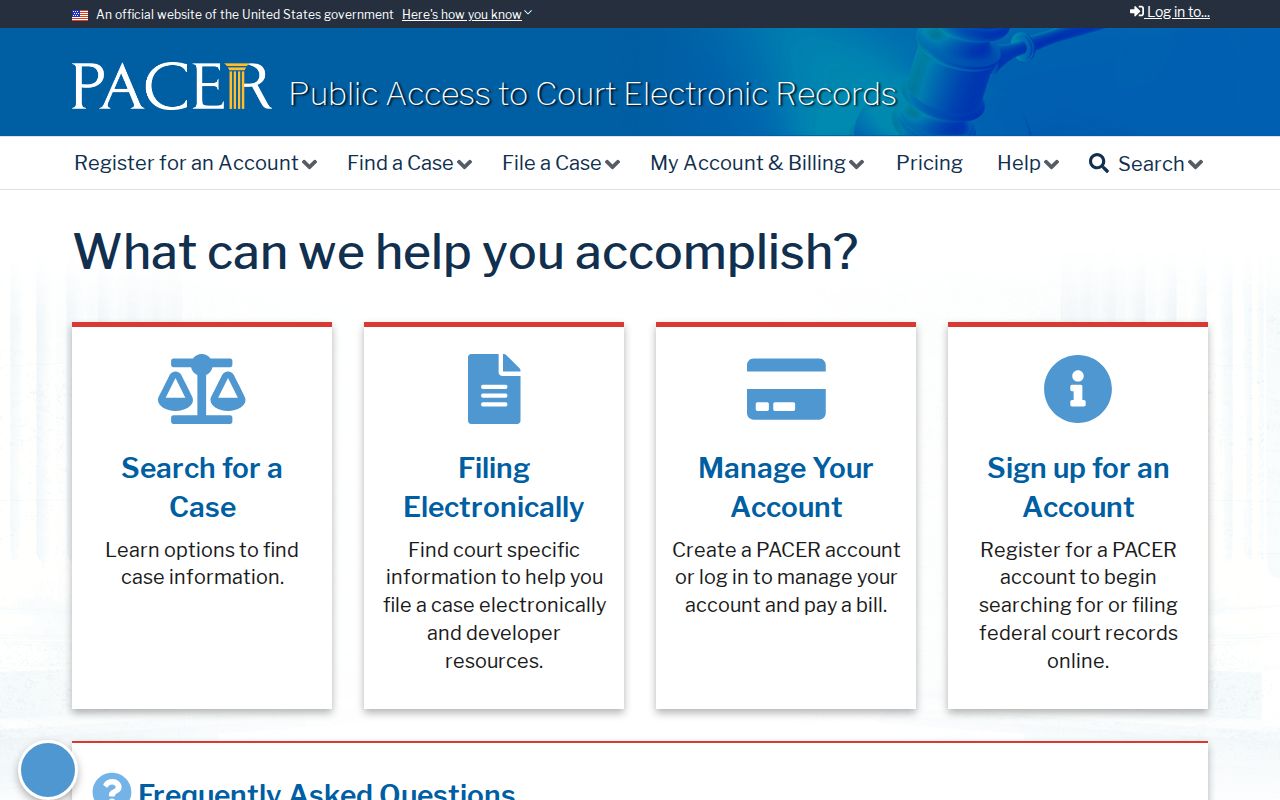
Cedar County lies in the Northern District of Iowa's Cedar Rapids Division, so PACER is a separate route only when the matter is federal.
Read Cedar County Charge Dispositions
The charge line answers a different question from the case banner. Disposition means the outcome of a charge, such as conviction, dismissal, or acquittal. A plea is the defendant's formal response. Judgment is the court's final determination, while sentence is the sanction imposed after conviction. Those terms help a reader avoid treating a filed accusation as a final result.
- Dismissal
- A charge ends without a conviction on that count.
- Acquittal
- The court or jury reaches a not-guilty result.
- Deferred judgment
- Iowa postpones entry of judgment while stated conditions are completed; it is not the same as expungement.
- Restitution
- The court orders payment for qualifying losses.
A booking allegation may change before the Cedar County Attorney files a trial information or other charge. Compare the initial event with the filed counts, then follow each count to disposition. If a disposition is unclear or a certified result matters, request the record from the clerk instead of relying on a screenshot.
Criminal Case Stages in Cedar County
A Cedar County case can begin with an arrest or summons. A judicial officer addresses initial appearance and release conditions. The prosecution proceeds through a complaint and, for an indictable matter, a trial information or indictment. Arraignment addresses the charge and plea. Discovery and motions shape the pretrial phase before a plea or trial. Judgment and sentence follow a conviction, with appeal or later enforcement possible.
Case flow: Charges Filed › Arraignment › Pretrial › Plea or Trial › Disposition › Sentencing
The Northern District of Iowa court site illustrates the separate federal court structure serving the region.
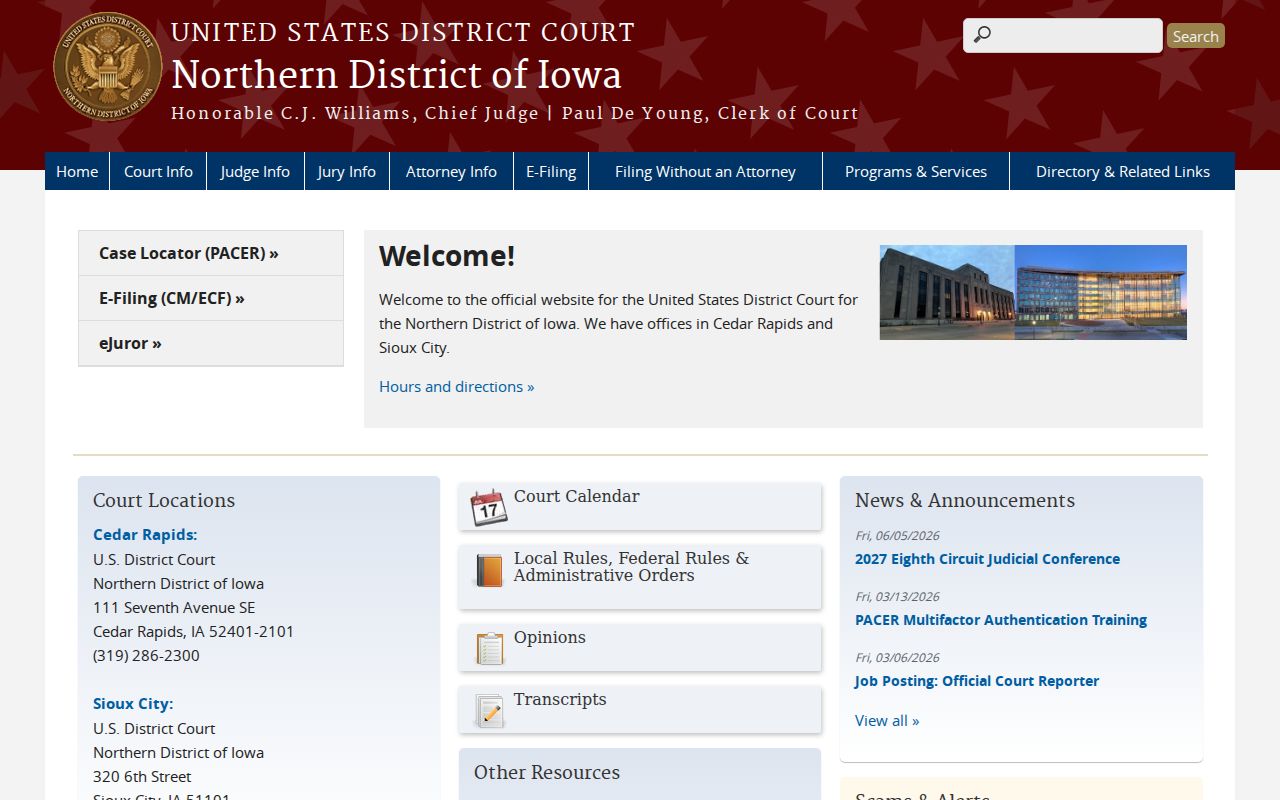
That federal route does not replace the Cedar County clerk or Iowa Courts Online for a state prosecution.
Cedar County Terminal and Certified Copies
The public-access terminal in the county where a case was filed can expose public electronic documents that an ordinary online search does not offer. For a Cedar County case, start with the courthouse and call ahead to confirm document access, copy or certification cost, device rules, and accessibility needs. No official source reviewed promises that visitors may photograph records, so ask before using a phone or camera.
Cedar County Clerk of District Court
400 Cedar Street
Tipton, IA 52772
563-886-2101
Monday-Friday, 8:00 a.m.-4:30 p.m.
A certified copy carries the clerk's formal authentication and is different from a printed web page. Give the case number when possible and state which filing, disposition, judgment, or sentence is needed. For an older case absent from the index, ask the clerk to check offline holdings rather than assuming no case exists.
Access Rules for Case Records
Iowa Code section 22.2 establishes public inspection and copying rights unless another law makes the material confidential. Court records also follow Judicial Branch access rules. Protected identifiers and confidential filings may be redacted, and juvenile court information is confidential under section 232.147. A Cedar County court search cannot lawfully reveal material excluded from public access.
Expungement can remove qualifying case information from ordinary public view under Iowa Code chapter 901C, but it is narrow and is not the same as a deferred judgment. The official Iowa expungement chapter provides the governing text.
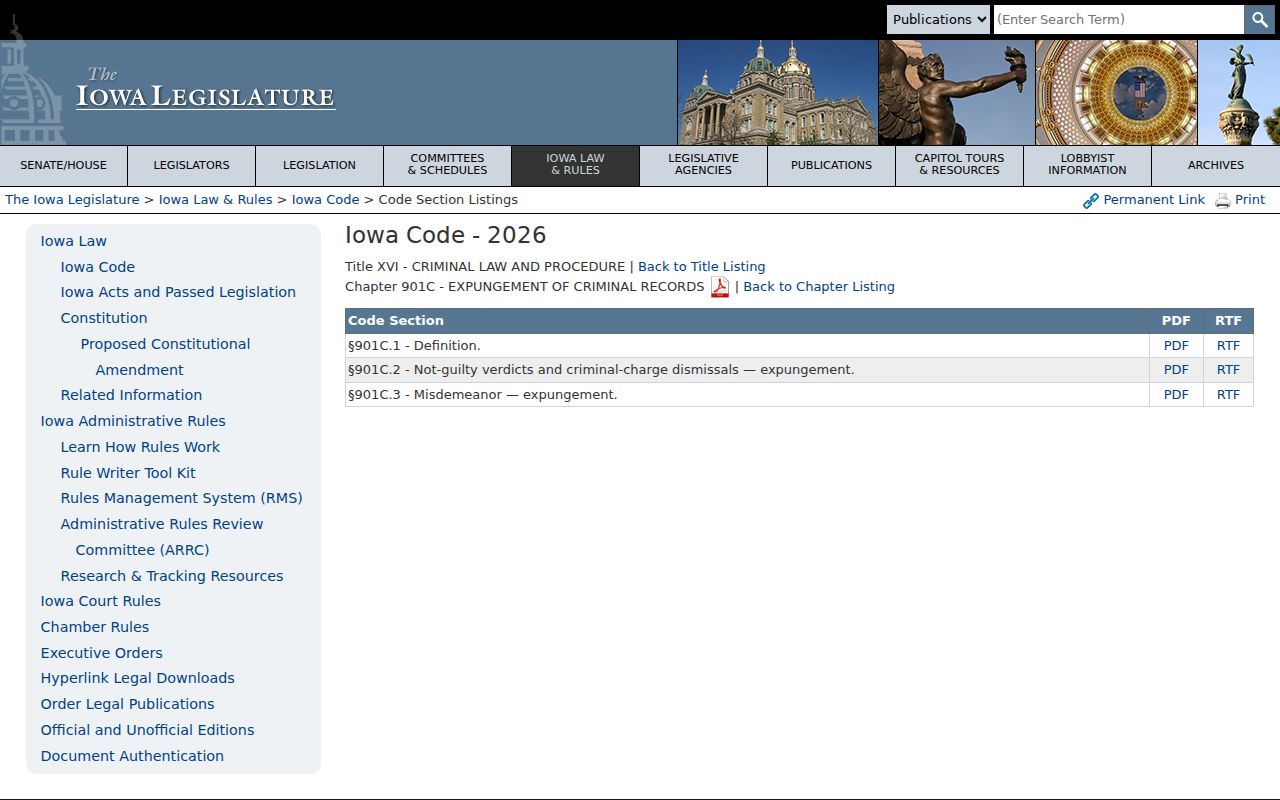
A missing Cedar County result may reflect confidentiality, expungement, an older file, a spelling issue, or a case that has not yet reached the index.
When Cedar County Cases Disappear
First test the search rather than drawing a legal conclusion. Remove spaces, try fewer name characters, use a former name, or reverse first and last names when an out-of-state identification document may have been scanned differently. A confidential case will not appear. A new filing can also take one business day to enter the public index.
Next, call the Cedar County clerk with the case number, party name, and approximate year. Ask whether the file is older, offline, confidential, or available only through the courthouse terminal. If the issue concerns the officer's account of an incident rather than the filed case, request the report from the arresting agency. The broader Cedar County criminal history overview explains why sheriff, court, and DCI records must be checked through separate custodians.
Note: A public index result is useful for research, but the clerk's certified record controls when formal proof of a Cedar County disposition is needed.